
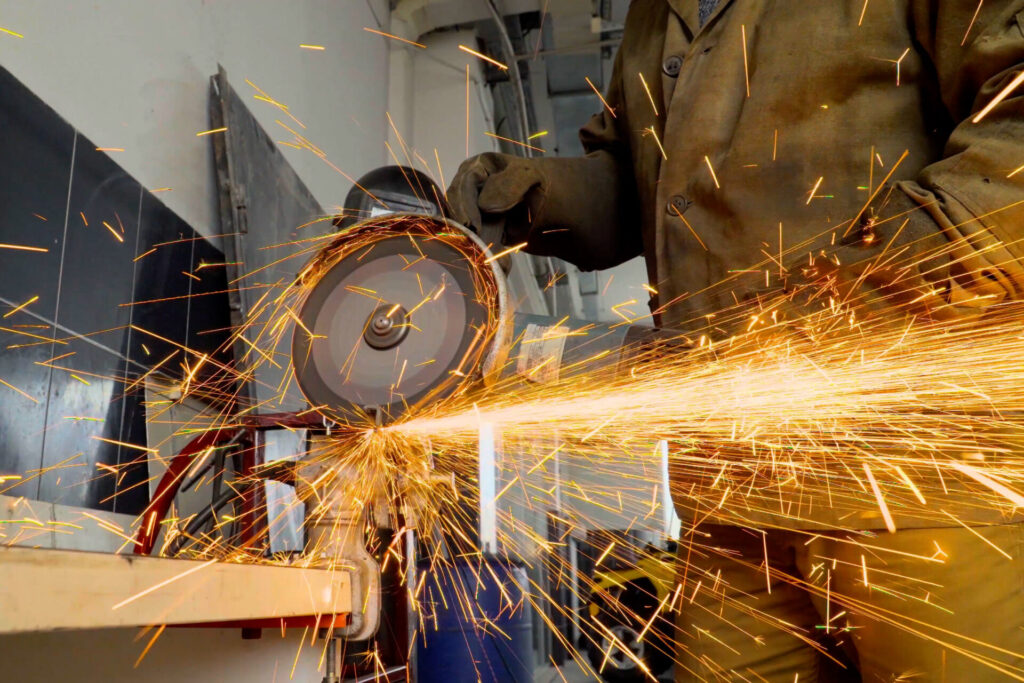
The visible hazards of cutting and grinding are only part of the picture. Dust, noise and hand-arm vibration can affect health, and nearby workers may be exposed without touching the tool. Planning should look beyond the person holding the machine and beyond the few minutes of the individual job.
For dust, consider what the material contains and whether the process can be changed or avoided. Grinding concrete can create hazardous silica-containing dust. Suitable extraction and, for some cutting tasks, water suppression can control dust at source. Where respiratory protection is required, it must suit the task; tight-fitting masks require fit testing and an effective face seal.
For noise, ask whether a quieter process or tool could achieve the result. Separation, suitable barriers and maintenance can also help. Hearing protection may be necessary, but it should support the control plan rather than become the only answer to a noisy workplace.
For vibration, consider alternatives to prolonged hand-held work, suitable lower-vibration equipment and maintenance. Exposure assessment needs to reflect actual use across the day. Rotating a tool between people is not a complete control plan if everyone still receives excessive exposure or the underlying process remains unchanged.
Consider a refurbishment team sharing a room with another contractor. Before introducing a grinder, agree how the work will affect that room, who needs to leave or be protected, and who will confirm that controls are working. Buying the right accessory is only one part of that conversation; the environment and work sequence matter too.
Review the plan when the material, tool, duration or location changes. Workers also need to understand when to report failed controls or concerns. Abrasive wheels training helps with wheel-related decisions, while employers must separately assess and manage the health exposures created by their particular cutting and grinding activities.
Describe the whole work pattern before assessing exposure. Several short tasks can add up across a shift, and the same worker may use other noisy or vibrating tools afterwards. Record the likely materials, equipment and time spent on the relevant activities, then check that the assessment reflects actual practice. Ask workers where estimates differ from the way work happens, including delays that leave machinery running or controls out of position.
For dust, arrange the work so controls can operate as intended. Someone should know how to check the equipment and what action to take if extraction or suppression fails. Do not let a spare mask become the informal answer to an ineffective control system. Respiratory protection, where required, needs to be selected and managed properly alongside the measures that reduce dust at source.
Treat noise and vibration as planning questions that influence purchasing and work methods. Ask suppliers for relevant information, consider suitable alternatives and review the result in the real workplace. A lower quoted figure on a product sheet does not by itself describe the employee’s exposure. Keep equipment maintained and encourage early reporting of problems or symptoms through the employer’s arrangements. Changes in material or duration should prompt another look at the assessment.
Teams around Newark can ask Harris Safety about abrasive wheels training while explaining their cutting and grinding activities. Confirm the delivery location and date for the particular requirement. Use the enquiry to clarify what the course covers, and arrange appropriate competent help for the workplace health-risk assessment where needed. Before the next task, make the controls, responsibilities and stop-work arrangements clear to everyone affected. That includes nearby trades and people who enter the area after the person holding the tool has finished.
Ask Harris Safety about abrasive wheels training for your team's cutting and grinding work.

