
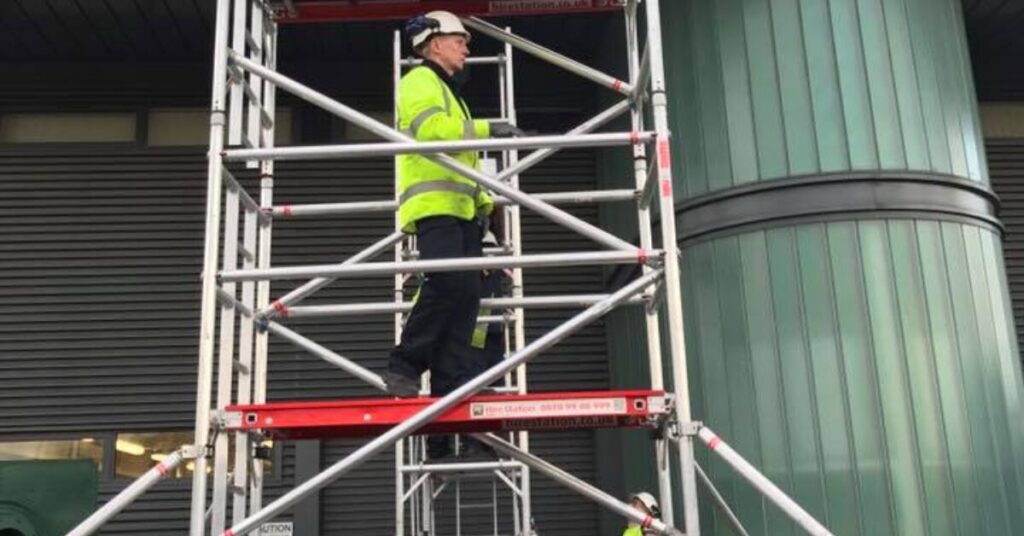
Tower assembly fall protection needs planning from the first stage. A finished tower with guardrails can look reassuring. The important question is how the people assembling it remained protected while reaching that finished arrangement. Fall protection needs to be considered throughout assembly, alteration and dismantling, including the stages when the tower is incomplete.
PASMA identifies Through the Trap, known as 3T, and advance guardrail systems, known as AGR, as recommended methods for protecting people during mobile-tower work. At a broad level, 3T avoids standing on an unguarded platform; AGR establishes guardrail protection before someone steps onto the relevant platform. These names describe methods, not permission to invent an assembly sequence.
The correct approach depends on the tower's instructions and components. Different models and configurations can have different requirements. Someone who remembers a sequence from another tower still needs the current instructions for this one. Familiar-looking frames or braces do not establish that the arrangement is correct.
For a supervisor, useful questions go beyond whether a finished tower looks complete. Does the team have the right manual? Can they identify the method specified for this configuration? Are the necessary components available before work starts? Does everyone understand their role? These questions help expose problems before they become a difficult decision partway through a build.
A harness is not a substitute for properly planned tower fall protection. PASMA advises against harness-and-lanyard use on mobile towers, highlighting the overturning risk during an arrested fall. Do not transfer the equipment arrangements used in a boom-type MEWP to a tower simply because both jobs involve working above ground.
Training provides a supervised setting to understand the method and the reasons behind it. Ask the provider which course fits the tower work your team actually undertakes, particularly if configurations go beyond ordinary mobile access towers. This article deliberately does not give assembly instructions: the practical process requires suitable training, competent supervision where needed and the manufacturer's sequence for the equipment in use.
Start with a check that the manual matches the actual tower and intended configuration. The person supervising the work should be able to identify the equipment, explain where the instructions are kept and confirm that the team has the required training. If the supplier changes the model, review that information again. A familiar delivery company or a similar-looking tower is not evidence that the previous method is suitable.
Plan the work area so the team can organise components and follow the specified method without avoidable interruption. Consider nearby traffic, people passing through and the space needed for the completed tower. Agree how access to an incomplete tower will be controlled. If work stops partway through, there should be a clear handover rather than an assumption that the next person knows which steps have been completed.
Missing or damaged components should prompt a clear reporting decision. For example, if the parts expected for the specified protection method are absent, do not ask the team to make progress with what is available. Contact the supplier and supervisor, and wait for a suitable resolution. The programme should allow for that decision without rewarding an improvised assembly sequence. A delay is easier to manage than uncertainty about whether people are protected.
Teams enquiring about PASMA training in Llantrisant should describe their actual assembly and dismantling duties. State whether the towers are ordinary mobile towers or a specialist arrangement, and confirm the course, venue and date with Harris Safety. After training, review how manuals, components and inspections are managed at work. Good course preparation and good site preparation support each other: the learner understands the method, and the employer provides the conditions and equipment needed to follow it.
Discuss your team's tower responsibilities with Harris Safety and ask about suitable PASMA training.

