
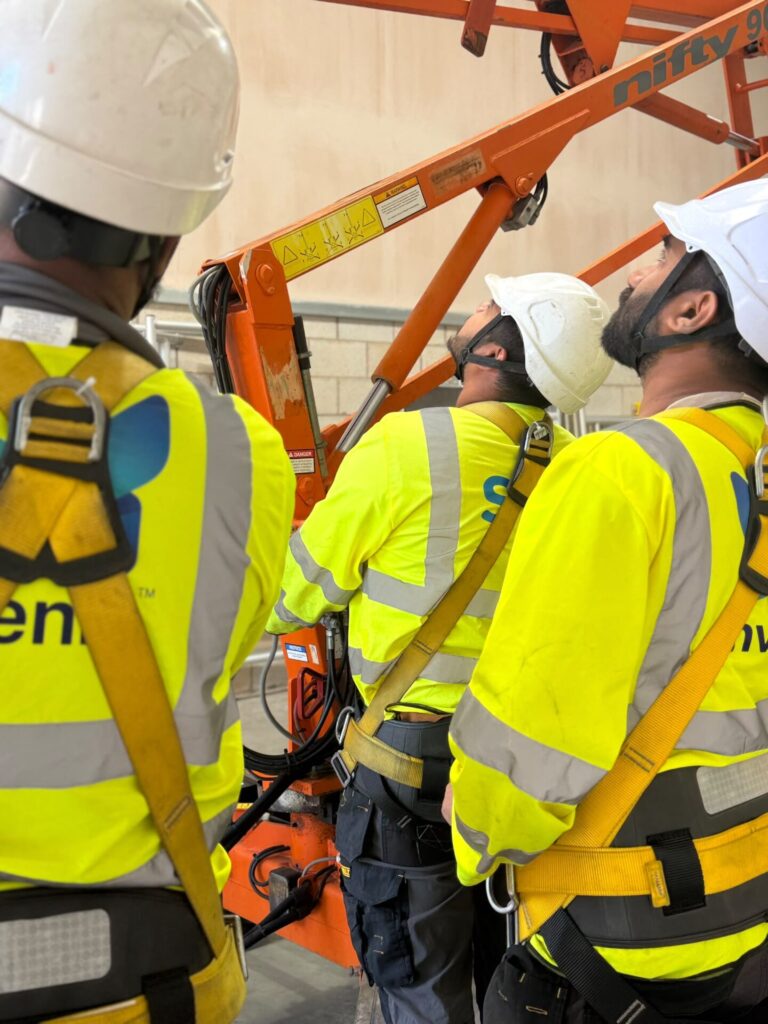
MEWPs for Managers connects training to the decisions behind powered-access work. A trained operator needs a properly planned job. Someone still has to arrange suitable equipment, assess the workplace and coordinate the work. IPAF's MEWPs for Managers course addresses the people responsible for those decisions, including supervisors, project managers, employers and facilities managers.
You do not need to drive the machine to influence its safe use. The person booking hire may determine whether it fits the task. A supervisor may control access to the work area, or decide what happens when conditions change. Those responsibilities are good reasons to discuss management training.
The course covers planning, equipment selection, risk assessment and managing MEWP operations. It also addresses trained and familiarised operators and recovery and rescue planning. It is management training rather than an operator qualification; completing it does not itself qualify someone to operate a MEWP category.
HSE's work-equipment guidance says adequate training applies to use, supervision and management. The relevant question is what knowledge and skills a person's responsibilities require. Avoid reducing that discussion to 'the operator has a card, so we are covered'. The employer's decisions and arrangements remain part of the work.
Think through a hypothetical maintenance booking. Who describes the task to the supplier? Who confirms site restrictions? Who coordinates other people using the area? Who decides whether the plan remains suitable? If these answers point to several staff, consider their roles together rather than assuming one course booking resolves every responsibility.
A useful enquiry explains what you manage, the environments involved and your previous training. Existing operators moving into supervision may have practical experience to draw on, while a manager arranging equipment may need a different starting discussion. Both can benefit from examining the planning decisions behind the machine's use.
Harris Safety offers MEWPs for Managers. Ask about the course in relation to your role, alongside operator training where that is also needed. Separating those training needs helps build a clearer plan for the people who arrange the work and the people who carry it out.
Bring an example of a job you are responsible for planning. It might be replacing lights in a busy warehouse or arranging external building maintenance. Note which decisions you currently make, which information comes from a supplier and where you rely on another department. A real example helps you identify questions to discuss during training without assuming that the course will approve a particular site method.
After training, review how your business passes information between the organiser, supervisor and operator. A machine specification may be correct while the operator has never received the agreed restrictions. A rescue arrangement may be written down while the nominated person is on another shift. Look for these gaps in communication and assign actions to resolve them. The value of management learning is clearest when it changes how the work is coordinated.
Consider how the plan is checked when circumstances change. Who reviews a substitute hire machine? Who deals with a route blocked by another contractor? Who can decide that work pauses while new information is obtained? Agree a process that supervisors can use in practice. Avoid expecting a lone operator to settle a planning question that belongs with the organisation arranging the task.
Managers around Worcester can contact Harris Safety through the training enquiry page to discuss MEWPs for Managers, giving their role, site environment and preferred delivery arrangements. The website lists the course within its IPAF offer; confirm the format, venue and date for the specific enquiry. Where the same person also operates equipment, discuss operator training separately. Keeping the responsibilities clear helps select suitable learning and gives the employer a more useful record than a general note saying that someone has attended an IPAF course.

