
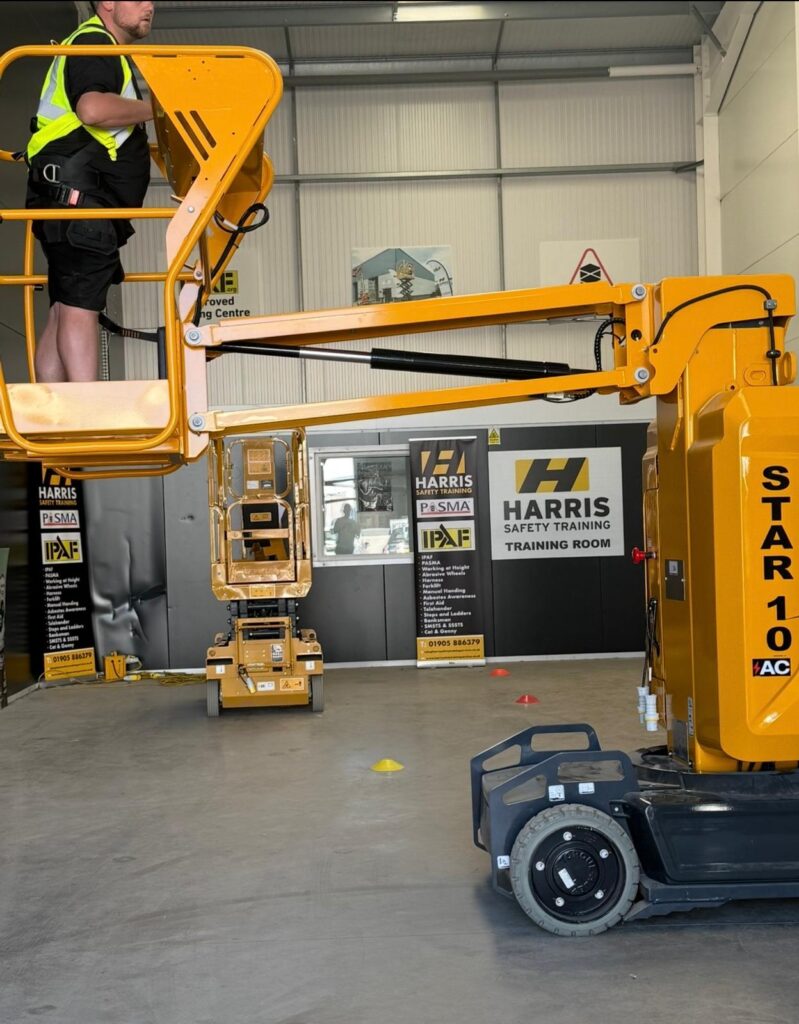
Indoor MEWP work brings building restrictions into the access plan. A dry indoor workspace can feel straightforward compared with an exposed outdoor site. It still needs an assessment. Warehouses, halls and factories contain their own access problems, from uncertain floor capacity to busy traffic routes and closely spaced overhead services.
Start with the supporting surface. IPAF highlights the importance of a floor or structure supporting the machine's loads at its contact points. An intact finish does not establish that capacity. Where capacity is uncertain, obtain appropriate information and competent advice; do not substitute a visual impression for the evidence needed.
Next, follow the proposed route from delivery point to work position. Doorways, turning space and changes of surface can affect the choice. Describe them in the equipment enquiry. Make the route assessment part of the plan, rather than discovering a restriction after a machine has been delivered.
Look above as well as ahead. Lighting, ducts, beams and other fixtures can create collision or entrapment hazards. IPAF's overhead-obstruction guidance addresses risks when travelling as well as when elevated. The plan needs to consider platform occupants and the space for machine movement, not just whether the machine itself fits through an opening.
A hypothetical lighting job during warehouse operations shows why timings matter. Forklift movements, stock handling and pedestrians may continue beneath or beside the work. The supervisor needs to understand how the access operation will interact with them. Put that discussion on the planning agenda early.
Before hire or use, ask who confirms the floor information, who checks the route and overhead restrictions, and who coordinates the work area. Keep unanswered questions visible. If the layout changes, or the job moves to another part of the building, revisit the assessment rather than assuming the earlier plan still fits.
Good indoor preparation gives the operator a defined task and working area. It also helps the person arranging equipment explain the site accurately and spot when additional assessment or training is needed.
Ask the building owner or responsible manager for reliable information about the proposed supporting surfaces. A clean warehouse floor can conceal a service opening, restricted loading area or a structure whose capacity needs assessment. Mark uncertain areas on the plan and establish who will obtain competent advice. Keep the actual machine information available, because a general statement that vehicles use the building does not establish suitability for every MEWP.
Walk the proposed travel route as part of the assessment, considering the conditions expected during the work. An empty aisle at a survey may be occupied by stock or deliveries on the day. Check how the route will be controlled and who coordinates any changes. A delivery plan should cover unloading and entry as well as the final position under the work, with clear responsibility for unresolved restrictions.
Consider a lighting replacement in an operating factory. The access route, work area and rescue arrangements need to fit around the activities of the building. Discuss how people will be kept informed, how nearby work will be coordinated and who reviews the plan if the production layout changes. Do not leave the operator to negotiate these interfaces alone after the machine arrives.
For training discussions in South Wales, Harris Safety’s Llantrisant IPAF page is a useful local starting point. Explain whether you need operator training, management training or both, and confirm the suitable course and available date. Back at the building, give the operator an up-to-date plan and the correct equipment information. If an unexpected obstruction or uncertain surface is found, pause and have the assessment reviewed. Indoor work becomes more manageable when the building knowledge, equipment specification and operating team are brought together before the task starts.

