
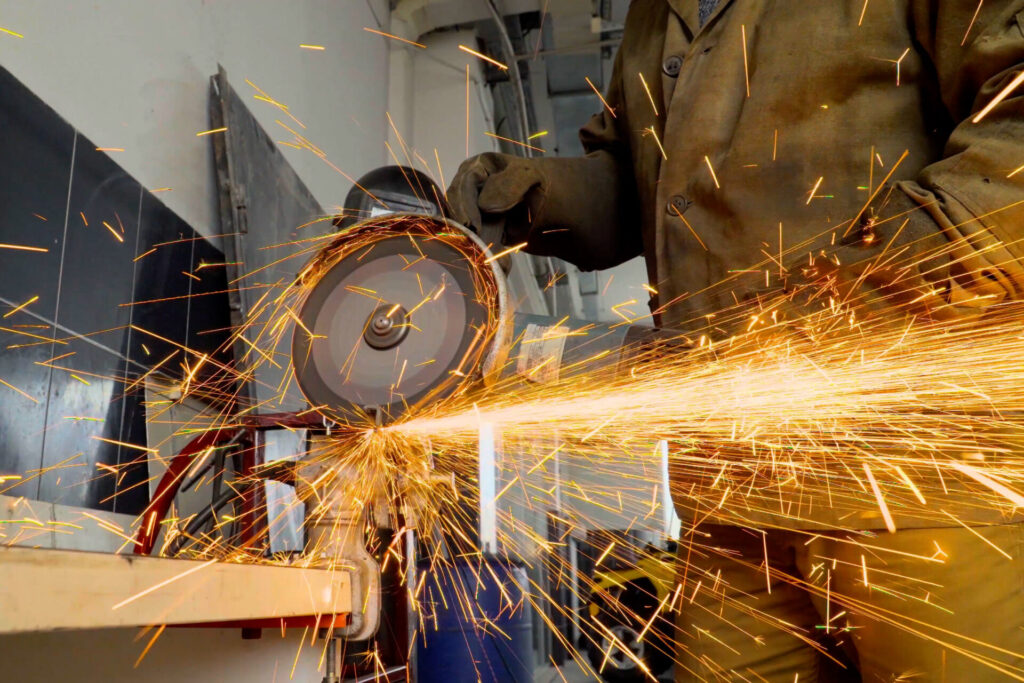
Cutting and grinding checks are a decision about readiness to work. A cutting or grinding job starts before the tool is switched on. If preparation is rushed, a person may inherit someone else's equipment, assumptions and unfinished checks. A short pause to establish what is ready and what remains uncertain is useful even when the intended cut seems straightforward.
Check the tool and wheel using the manufacturer's instructions and the checks you have been trained to carry out. Look for damage and confirm the wheel is suitable for the intended use. Wheel mounting should be undertaken by an appropriately trained person; finding a replacement in the toolbox is not permission for an untrained colleague to fit it.
Suitable guarding and other protective arrangements must be in place. An inspection is also only useful if defects lead to action. Workers need a clear way to take suspect equipment out of use, report the problem and obtain a suitable replacement without feeling expected to improvise around it.
Think about the handover between users. Can the next person identify the machine and fitted wheel? Do they have access to the instructions? Is there a known fault awaiting attention? A simple conversation can expose an assumption such as 'I thought you checked it', which otherwise goes unnoticed until the work is already underway.
The surroundings deserve the same attention as the tool. Ask what has changed since the task was planned: different people nearby, a blocked route, newly stored materials or a workpiece moved to another area. If the setup no longer matches the agreed method, pause and have it reviewed before continuing.
Employers can make preparation easier by keeping instructions, reporting arrangements and responsibilities clear. Training should connect checks to decisions, rather than turn them into a form-filling exercise. Harris Safety can discuss abrasive wheels training for the staff who use and mount your equipment, helping you identify which roles need to be included.
Organise the checks around the task rather than around an empty form. First establish what is to be cut or ground, which equipment has been selected and whether the person carrying out the work has the relevant preparation. Then follow the machine and wheel instructions within the worker’s competence. A completed checklist is useful when it reflects a real examination and shows how an identified problem was dealt with.
Consider a tool handed over between shifts. The next user finds a note about unusual vibration, but no record of what happened afterwards. The useful response is to clarify the fault and prevent use until the concern is properly resolved, rather than start the machine to see whether the symptom returns. Make the reporting system easy to follow and ensure that the person receiving the report has authority to arrange action.
The workpiece and surrounding activity also need attention. Explain how the work will be supported, how people nearby will be kept away from the operation and what controls the assessment requires. If the task moves from an open yard to an occupied room, the earlier arrangements may no longer fit. Review the changed conditions with the supervisor before continuing, including health exposures as well as immediate injury hazards.
Employers around Llantrisant can discuss abrasive wheels training with Harris Safety for staff involved in use, mounting and supervision. The website offers centre and workplace delivery options; ask which arrangement suits your equipment and delegates, then confirm the actual venue and date. Bring examples of the questions your current checks raise. That gives the training discussion a practical purpose and helps you plan any further instruction or assessment needed when staff return to work.
Discuss abrasive wheels training and the roles involved in your workplace.

